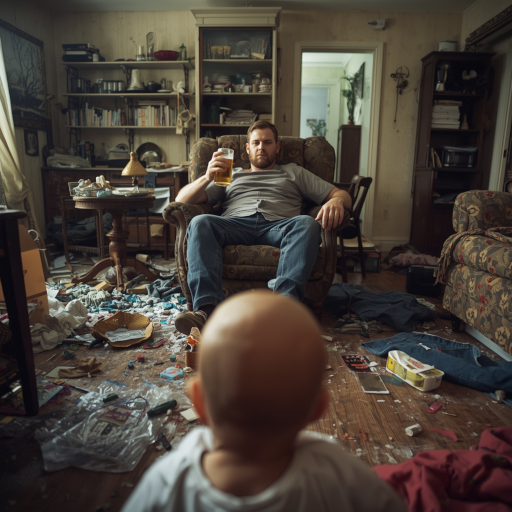
Son, Get Me a Beer: The Hidden Harm of Normalized Drinking
Written for an assignment for People & Games class at Media Design School proudly written by Callan Hansen
12/11/2025
Introduction
Alcohol is a global phenomenon that most people don't put much thought into. It is normal to have an alcoholic beverage after work, at dinner, or in the weekend. Society accepts it as a normal part of life. However, being normal does not make it harmless. Alcohol heavily affects people’s minds, damages relationships, as well as disconnects families and communities. Stanesby et al. (2018) notes “Being in a close relationship with someone who engages in problematic alcohol use or whose drinking has harmed others (hereinafter referred to as ‘harmful drinkers’) increases one’s risk of experiencing harms from others’ drinking.” Royston et al., 2024 found that “just under one in ten (9.6%) Singaporeans reporting at least one or more harmful consequences—physical assaults, family problems, property vandalized, and financial trouble—experienced as a result of someone else’s drinking.” Alcohol use has been proven to impair judgement and self-control, particularly when ego or self-image is challenged (Prince, 2024). This research shows that alcohol impairs executive functioning, including attention, impulse control, and emotion regulation. This makes it harder to respond appropriately in social situations (Prince, 2024). Alcohol is so normalized that it can be difficult to tell if someone is addicted. Because of that, people often don’t realize there’s a problem until it has already become serious.
Son, Get Me a Beer
The artefact titled “Son, get me a beer”, is designed to give players the experience of the harm of alcohol addiction. The player plays as a baby trying to fetch beer for a dad who becomes more drunk, aggressive, and unpredictable each day. This shows how impaired executive function and impulse control under alcohol can lead to aggression and emotional instability (Prince, 2024). The gameplay lets the player experience the harm of excessive drinking. Families do not start broken; they break over time. The game uses comedy in contrast with its dark underlying themes of alcoholism and domestic abuse to show how drinking dissociates people from everyday life and relationships. This technique makes suffering feel normal, even laughable. This comedic contrast is intentional, allowing the player to stay calm enough to think logically without too much negative emotion clouding their judgment.
How Alcohol Affects the Mind and Behaviour
Alcohol does more than just harm people physically. It removes their focus from their own actions and has them focused on everything outside themselves. Prince (2024) suggests that alcohol reduces self-regulation and amplifies emotional responses, further hindering reflection and critical thinking. When faced with social threats, individuals under the influence are even less capable of managing emotion or accepting feedback. This makes them more defensive and makes it hard to connect with others (Prince, 2024). Drinking makes it harder to reflect, easier to blame others, and contributes to inflated self-importance. This creates an unhealthy cycle. Drinking dulls awareness and critical thinking, which increases defensiveness and social disconnection. Feeling disconnected and unable to reflect, people drink more to escape, which dulls awareness even further, makes it easier to blame others, and reinforces complacency. Over time, this cycle grows stronger, gradually disconnecting people from their own lives, relationships, and the world around them. As Prince (2024) explains, alcohol not only clouds judgement but also reduces the cognitive functions that enable genuine awareness. Our game puts players into this cycle, showing how normalized drinking hides harm and keeps people trapped.
Normalization in Everyday Life
Alcohol does not just affect the person drinking, it becomes part of everyday life. It’s in workplace culture, where grabbing a beer after work is seen as normal. It’s in media and advertising, telling us that drinking is fun, social, or just part of life. Social events, family dinners, sporting games, almost every ritual seems to involve alcohol somehow. When something is everywhere and expected, it stops feeling like a choice and starts feeling like a reality. That’s why most people barely notice the harm it’s causing.
The harm does not just affect the drinker. Royston et. Al. (2024) found that almost one in ten people experienced serious consequences because of someone else's drinking. Things like family problems, physical assaults, vandalism, or financial trouble. That’s just the tip of the iceberg. Normalized drinking slowly wears down relationships, creates stress in families, and disconnects communities. Over time, what starts off as small incidents or “just a few drinks”, can turn into real damage that everyone around the drinker feels.
The worst part is how invisible it all is. Because drinking is seen as normal, the damage gets ignored. Families look the other way, entire communities shrug it off, and society treats the consequences as just part of life. Research shows that people who are close to a harmful drinker, like a parent, partner, or sibling, are far more likely to experience harm from emotional stress, physical harm, and neglect to violence and financial strain (Stanesby et al., 2018). Our game, “Son, Get Me a Beer”, puts players right in that situation. What seems funny at first, running around fetching beers for a drunk dad, quickly shows how normalized drinking hides behind real suffering, makes destructive behaviour feel normal, and slowly tears people apart.
Experiencces Alcohols Impact Through Gameplay
The design of “Son, Get me a Beer”, looks at how drinking can make people unpredictable and reactive. Even small mistakes made by the player can set off anger, defensiveness, or blame from the father. The game puts players in that world, showing how normalized drinking turns these behaviours into everyday patterns that slowly destroy relationships and make life harder for everyone around them.
We chose for the player to be a baby because it represents helplessness and a lack of control. It shows how innocent people are caught in the consequences of problems they don’t cause or understand. This forces the player to experience the confusion and lack of agency from that perspective, showing how family members feel trapped in cycles of abuse and addiction.
The repetition of fetching the dad a beer each day reflects the nature of addiction, where every day feels the same, with no progress or resolution. Over time, the repetition becomes dull and uncomfortable, encouraging the player to notice how something that was funny at first slowly starts to feel depressing.
The unpredictability of the dad shows how alcohol makes people violent and emotionally unstable. The reactive voice lines reinforce how small mistakes can set off irrational anger in real abusive dynamics.
The house visually represents the decline of both the fathers mental state and the family environment. As the addiction worsens, the home, which was once a clean and safe space, turns into neglect and decay. It reflects how the effects of addiction are invisible until it’s too late.
The point of our game is to make people stop and think about how normal drinking has become, and how that normal hides behind so much harm and dysfunction in everyday life. It’s about making them see the world in a new way, to come away with a new kind of awareness, realizing how often routine is used to hide pain, and how something so dark can feel normal. The game starts off funny on purpose, because this is how normalized drinking works. It makes things that should never be funny seem harmless. But as the game goes on, it becomes harder to laugh. It shows the player how drinking hides suffering behind jokes, habits, and excuses, until nobody sees the problem anymore.
Encouraging Awareness and Mindfulness
The transformation we want is awareness. We want players to think about how easily alcohol consumes people’s lives, how it disconnects and slowly rips families apart, and how the damage becomes invisible over time. Studies suggest that the closer someone is to a harmful drinker, the more intense and frequent the negative consequences become, especially for family members (Stanesby et al, 2018). Our game puts players in that position to feel how hidden yet damaging normalized drinking can be. If someone finishes the game and feels that discomfort or starts questioning why they ever thought this was normal, then the message has reached them. “Son, Get me a Beer” shows how easy it is to numb pain and disconnect from reality when everyone else does too.
We want players to reflect on their own relationship with substances, to think about whether they’re using them to connect or escape. Our goal is to encourage mindfulness and awareness, so that choices around alcohol or any substance come from a place of connection rather than disconnection or avoidance.
Reference List
- Prince, Erin, "Alcohol and cognition: ego threat as a moderator" (2024). Masters Theses and Doctoral Dissertations. Link
- Royston K, Koh YS, Sambasivam R, Zhang Y, Adbin E, Chong SA, Lee C, Ma S, Chow WL, Subramaniam M. “Alcohol’s Harm to Others: Victim Data on Prevalence and Risk Factors in a Nationwide Population Survey.” Int J Ment Health Addiction (29th July, 2024). Link
- Stanesby O, Callinan S, Graham K, Wilson IM, Greenfield TK, Wilsnack SC, Hettige S, Hanh HTM, Siengsounthone L, Waleewong O, Laslett AM. “Harm from Known Others' Drinking by Relationship Proximity to the Harmful Drinker and Gender: A Meta-Analysis Across ten Countries.” Alcohol Clin Exp Res. (2018) Link